Casino Parking Dynamics Shape Late Registration Patterns in Poker Tournaments

Observers note that casino parking availability often determines when players complete their tournament entries, especially as events approach their late registration windows in mid-2026. Research from regional gaming authorities shows that full lots during peak afternoon hours correlate with spikes in registrations occurring closer to the deadline, since drivers spend additional minutes searching for spaces before entering the card room.
Data collected across multiple properties indicates that structured parking systems, including multi-level garages and surface lots with automated gates, create predictable bottlenecks. When these systems reach capacity around 3 PM to 5 PM, participants adjust their arrival times accordingly, which in turn shifts registration activity later into the evening. Figures from the Nevada Gaming Control Board reveal consistent patterns where parking occupancy rates above 85 percent coincide with a 22 percent increase in late entries during summer tournament series.
Parking Infrastructure and Arrival Timing
Casinos have expanded valet services and implemented real-time parking apps in several jurisdictions, yet these measures produce mixed results during large poker festivals. Participants who rely on external lots or street parking report longer walks that add ten to fifteen minutes to their journeys, prompting them to delay final decisions until they confirm space availability. Studies conducted by the University of Nevada, Reno found that players monitoring digital lot status updates registered an average of 47 minutes later than those with reserved spots.
Traffic flow around casino perimeters plays a direct role as well. Construction projects and concurrent events at neighboring venues compound congestion, forcing drivers into circling patterns that extend arrival windows. In July 2026, properties in the Las Vegas area documented a measurable uptick in late registrations on weekends when parking-related delays exceeded twenty minutes, according to internal operational reports shared with industry analysts.
Player Behavior and Registration Data
Tracking systems at major tournament venues capture entry timestamps alongside vehicle entry logs, creating datasets that highlight the connection. Analysts observe that single-day events with shorter late registration periods see sharper clustering of entries once parking stabilizes after initial rush hours. Multi-day series spread this effect across several days, yet the same underlying dynamic persists because many players arrive from distant locations and factor travel time into their plans.
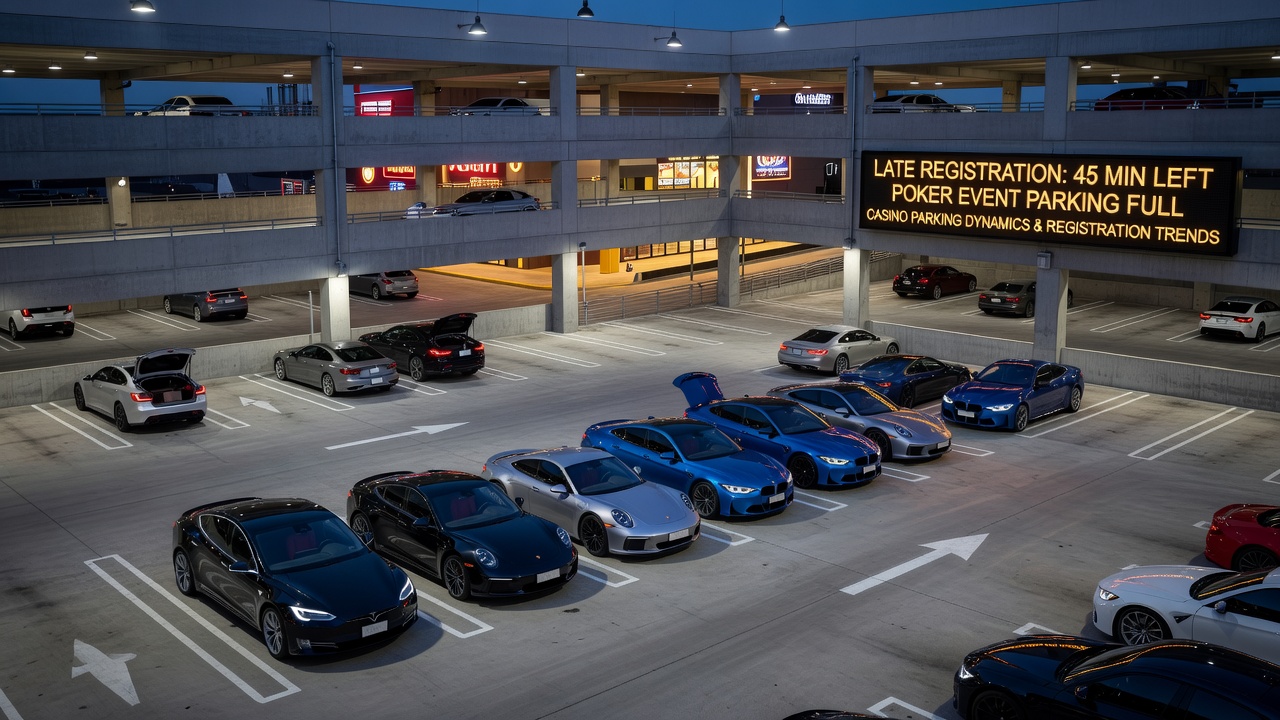
Regional variations emerge clearly when comparing properties. Venues with integrated transit options or extensive shuttle services experience flatter registration curves, whereas standalone casinos without such amenities show pronounced late spikes. Canadian provincial data from the Alcohol and Gaming Commission of Ontario supports similar observations, noting that parking constraints in urban casino districts influence entry timing more than promotional incentives during peak summer months.
Operational Adjustments and Industry Responses
Event organizers have begun coordinating with parking management teams to stagger entry waves and reduce simultaneous arrivals. Some properties now release parking capacity updates through tournament apps, allowing players to time their departures more precisely. These adjustments appear in operational logs from July 2026 events, where coordinated efforts reduced average registration delays by nearly twelve minutes compared with the prior year.
Security and surveillance teams contribute additional data points through vehicle count monitoring at access points. Their records demonstrate that overflow parking activation times align closely with the tail end of late registration periods, creating a feedback loop where available spaces encourage final entries. Industry associations such as the American Gaming Association have compiled these metrics to help properties forecast staffing needs for both parking and tournament desks during high-volume periods.
Conclusion
Patterns documented through combined parking and registration data illustrate how physical infrastructure directly shapes participation timelines in poker events. Continued monitoring by regulatory bodies and research institutions will clarify whether expanded digital tools or alternative transit partnerships further moderate these effects in coming seasons.