Connections Between Reward Mechanisms and Risk Assessment in Extended Online Card Sessions
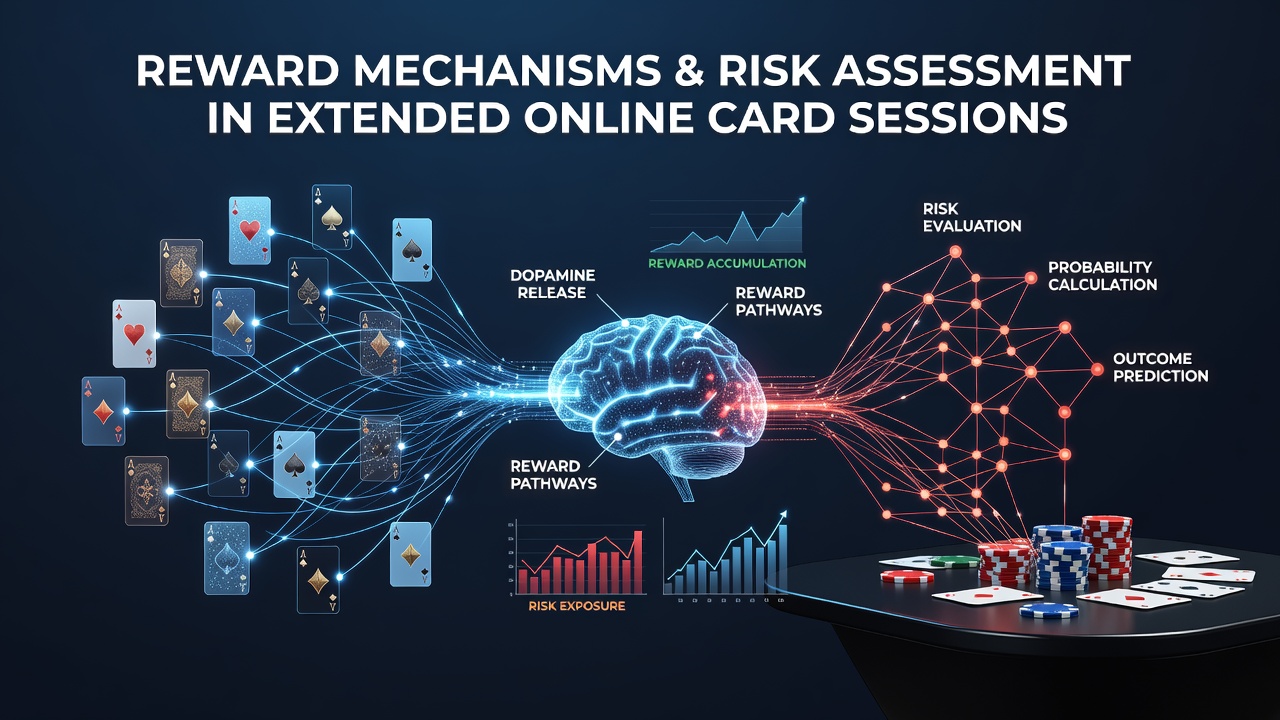
Extended online card sessions create environments where reward structures interact directly with how participants evaluate potential losses and gains, and data collected through platform analytics shows measurable shifts in decision patterns once players accumulate points or unlock tier benefits. Researchers tracking session logs have identified that loyalty programs often extend play duration by 25 to 40 percent, which in turn alters the frequency of higher-stakes decisions during later stages of those sessions.
Reward Structures in Digital Card Platforms
Most major operators deploy tiered loyalty systems that award points based on hands played and rake contributed, with benefits such as cashback percentages, tournament ticket credits, and reduced rake rates unlocking at specific thresholds. These mechanisms operate continuously, so participants receive immediate visual feedback each time their balance increases, and platform data indicates that players who reach mid-tier status tend to maintain consistent session lengths even when facing downswings. In July 2026 several North American sites reported a 12 percent rise in average session time among users enrolled in updated reward programs compared with the previous quarter.
Risk Assessment Patterns During Prolonged Play
Extended sessions introduce fatigue factors that interact with reward visibility, and studies of hand histories reveal gradual increases in call frequencies and decreases in fold rates as cumulative play exceeds four hours. Participants who have accumulated substantial loyalty points show a statistically higher likelihood of continuing in marginal situations, according to aggregated telemetry from multiple operators. This pattern appears because the perceived value of ongoing point accrual offsets the immediate financial risk in real time, creating a feedback loop where small wins or near-misses reinforce continued engagement.
Observed Interconnections in Session Data
Platform records demonstrate that risk tolerance does not remain static; instead it fluctuates in tandem with progress toward the next reward tier. One analysis of over 2 million hands from 2025 found that players within 15 percent of unlocking a new cashback level increased their average bet size by 18 percent in the final stages of sessions, while those far from the next milestone maintained steadier sizing throughout. Such adjustments occur without explicit instruction from the platform, suggesting that the reward display itself functions as an environmental cue that recalibrates internal risk calculations.
What's interesting is how these effects compound across multiple sessions. Players who regularly achieve higher tiers often exhibit narrower loss-chasing windows in subsequent play, yet they simultaneously accept higher variance within individual sessions once point thresholds become visible again. This dual movement appears in longitudinal data sets maintained by several European operators, where session-level metrics show both shorter recovery times after losses and elevated willingness to enter multi-way pots near reward milestones.

Regional Research and Platform Comparisons
Analyses conducted by the American Gaming Association highlight similar patterns across U.S.-facing sites, while parallel work from Australian academic groups has documented comparable shifts among participants using international platforms. These independent data sets converge on the finding that reward visibility correlates with extended time on site, although the magnitude varies by game type and regional regulatory environment.
Operators have responded by adjusting how reward progress appears during active play, sometimes delaying point updates until session end or capping visible progress indicators after certain durations. Early results from one such modification implemented in early 2026 show a modest reduction in late-session bet sizing among affected users, suggesting that altering the timing of reward feedback can moderate risk adjustments without removing the underlying incentive structure.
Conclusion
The documented links between reward accumulation and evolving risk assessment rest on observable session metrics rather than isolated anecdotes. Continued monitoring across different markets will clarify how adjustments to loyalty program design influence long-term behavioral patterns, particularly as platforms refine their interfaces in response to aggregated player data through 2026 and beyond.