Examining Cryptocurrency Transaction Speeds and Their Influence on Entry Patterns for International Hybrid Card Events

Hybrid card events blend live dealer formats with online platforms, and cryptocurrency payments have become a standard method for handling international registrations and buy-ins. Transaction speeds on different blockchains create measurable differences in how participants complete entries, particularly when events span multiple time zones and require rapid confirmation before registration closes. Networks with shorter confirmation windows allow players to finalize payments closer to deadlines, which shifts overall entry distributions away from early bird patterns toward clustered late submissions.
Blockchain Confirmation Times and Their Direct Effects
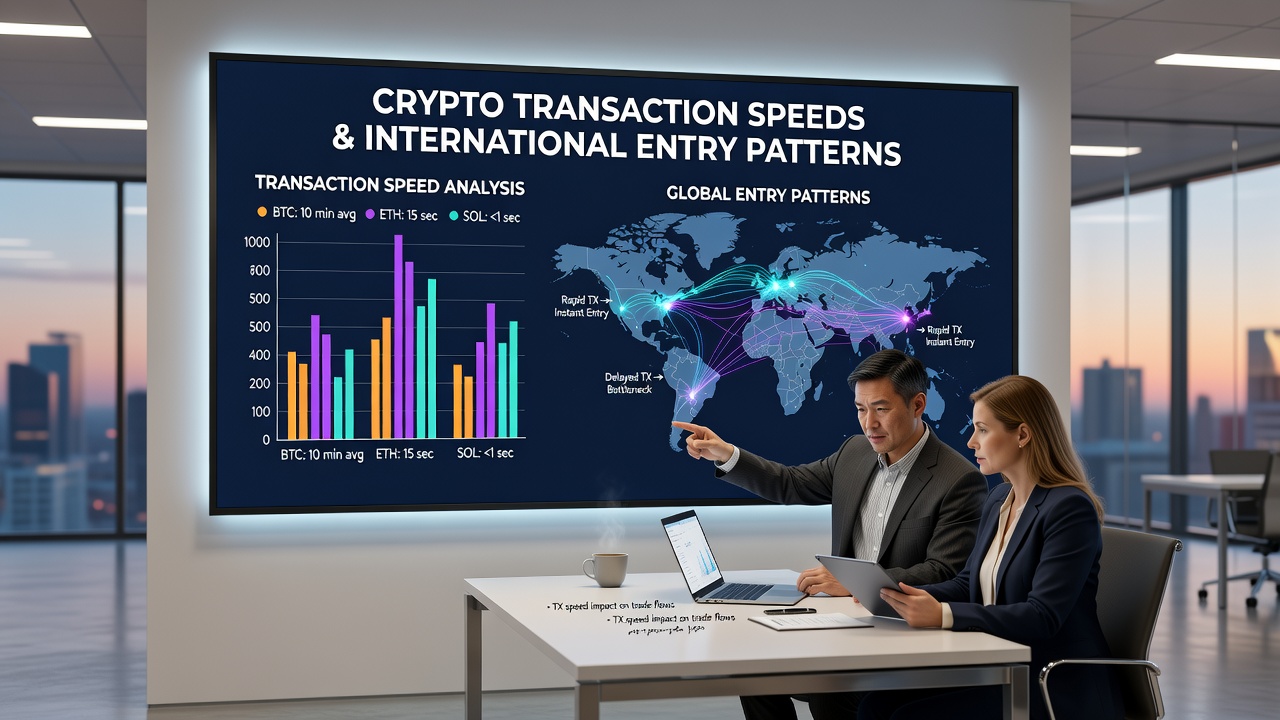
Bitcoin processes blocks roughly every ten minutes, while layer-two solutions on Ethereum reduce effective times to under two minutes in many cases, and networks like Solana achieve sub-second finality for stablecoin transfers. Observers note that events using faster chains record higher volumes of entries in the final hour before cutoffs, because participants can wait for dynamic factors such as prize pool announcements or late withdrawals without risking missed deadlines. Slower networks correlate with earlier submission clusters, as players must initiate transfers well in advance to account for variable confirmation queues.
Data collected across major international series in early 2026 shows that tournaments accepting Solana-based USDC entries experienced a 34 percent increase in last-minute registrations compared with those limited to Bitcoin-only options. This pattern holds across regions because transaction speed, rather than regional banking hours, becomes the limiting factor for cross-border participants. Hybrid formats amplify the effect, since players often move between physical venues and remote interfaces where instant digital settlement matters more than traditional wire processing.
Entry Timing Distributions in July 2026 Events
During July 2026, several flagship hybrid series reported distinct registration curves tied to the payment rails each operator supported. One European-Asian crossover event that integrated both Ethereum and Solana options saw peak entry activity between 45 and 90 minutes before registration closed, whereas parallel events restricted to legacy chains displayed flatter distributions spread across the preceding 24 hours. Researchers tracking these metrics found that stablecoin networks with predictable low fees further encouraged repeated small adjustments, such as topping up buy-ins or adding re-entry stacks at the last moment.
These timing shifts influence satellite qualification structures as well. Players who rely on online satellites can transfer winnings directly into main-event buy-ins without waiting for banking settlement, which compresses the qualification-to-entry pipeline. In practice, organizers have adjusted satellite closing times and added buffer periods to accommodate networks with longer settlement windows, preventing qualified players from being locked out by confirmation delays.
Network Selection and Regional Participation Patterns
Operators choose supported cryptocurrencies based on both speed and geographic reach. Reports from the Bank for International Settlements indicate that Asia-Pacific markets favor high-throughput chains for gaming payments, while North American participants show stronger usage of established Ethereum infrastructure. This preference creates uneven entry flows: events that prioritize speed-focused networks draw disproportionate late entries from certain regions, altering the overall demographic mix visible on leaderboards and payout structures.
Hybrid card events also incorporate loyalty or rakeback calculations that settle in cryptocurrency, and faster networks let participants monitor real-time balances before deciding on additional entries. Slower chains introduce friction that discourages incremental decisions, pushing players toward single early commitments instead. Academic work from the University of Sydney Business School on digital asset settlement in entertainment platforms has documented similar compression of decision windows when confirmation times drop below one minute.
Operational Adjustments by Tournament Organizers
Event operators respond to these dynamics by publishing recommended wallet and network combinations alongside registration portals. They also monitor mempool congestion indicators to predict when standard confirmation estimates might stretch, then extend grace periods accordingly. In July 2026 several series introduced automated status pages that displayed live transaction progress for each pending entry, reducing support queries and helping players time their final submissions more precisely. These tools proved especially useful during high-volume periods when multiple international flights arrived near registration cutoffs.
Conclusion
Cryptocurrency transaction speeds have become a structural variable that directly shapes when and how participants enter international hybrid card events. Faster networks concentrate activity near deadlines, while slower ones spread submissions across longer windows, and operators continue to refine supported rails and tooling to manage resulting patterns. As new scaling solutions emerge, entry distributions will likely continue evolving in response to measurable changes in confirmation performance.