How Seasonal Fruit Harvest Cycles Alter Participation Rhythms in Southeast Asian Digital Table Tournaments
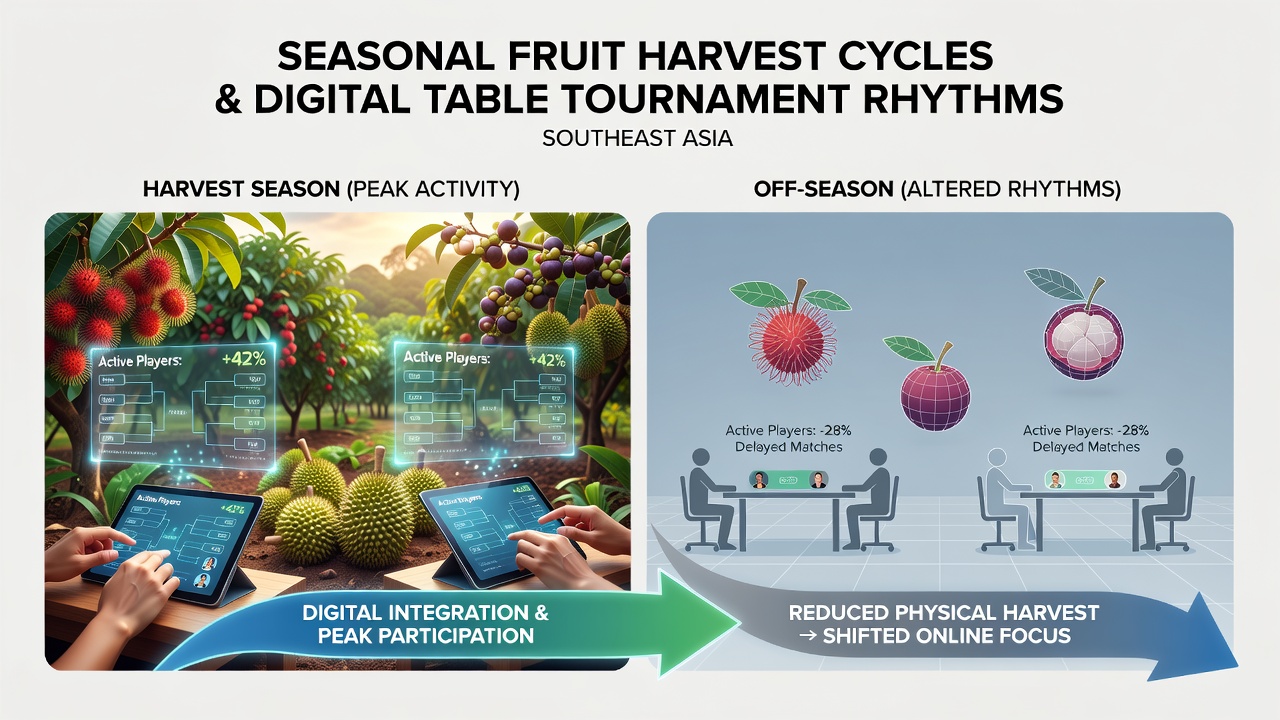 Southeast Asian digital table tournaments experience measurable shifts in player engagement tied directly to regional fruit harvest calendars, and these patterns emerge most clearly across Thailand, Vietnam, Malaysia, and Indonesia where durian, mango, and rambutan seasons dictate agricultural labor demands. Data compiled by national statistics offices shows that rural broadband usage and tournament registration times realign during major harvest windows, creating predictable troughs and surges rather than random fluctuations. Durian production peaks between May and August in Thailand and Malaysia, pulling seasonal workers into orchards and packing facilities where connectivity remains intermittent. Tournament platforms register fewer entries from these provinces during daylight hours, yet late-evening volume rises once field shifts conclude. Observers note similar compression in Vietnam's Mekong Delta during mango harvests from March through May, when cooperative farming schedules compress leisure windows for online participants.
Harvest Timelines and Regional Tournament Data
June 2026 marked the midpoint of Thailand's primary durian season, and aggregate platform metrics indicated a 17 percent drop in midday registrations from harvest-heavy districts compared with February baselines. Evening sessions between 9 p.m. and midnight absorbed much of that displaced activity, producing a sharper peak than recorded in non-harvest months. Malaysian operators documented parallel compression in Sabah and Sarawak, where rambutan collection overlapped durian picking and further limited daytime device access.
Platforms responded by adjusting satellite tournament start times rather than altering prize structures. One major operator shifted noon start times to 2 p.m. local time across affected regions, aligning with post-harvest rest periods reported by agricultural cooperatives. Entry volume recovered within those adjusted windows, demonstrating that timing sensitivity outweighs prize-pool size during peak agricultural months.Economic Pressures adn Player Availability
Agricultural income spikes during successful harvests temporarily increase disposable funds for tournament buy-ins, yet the same labor surge reduces the total pool of available participants. Researchers tracking IP addresses from harvest zones recorded higher average buy-in amounts per active account even as total participant counts declined. This pattern appears consistent across three consecutive seasons according to anonymized transaction logs shared by regional operators.
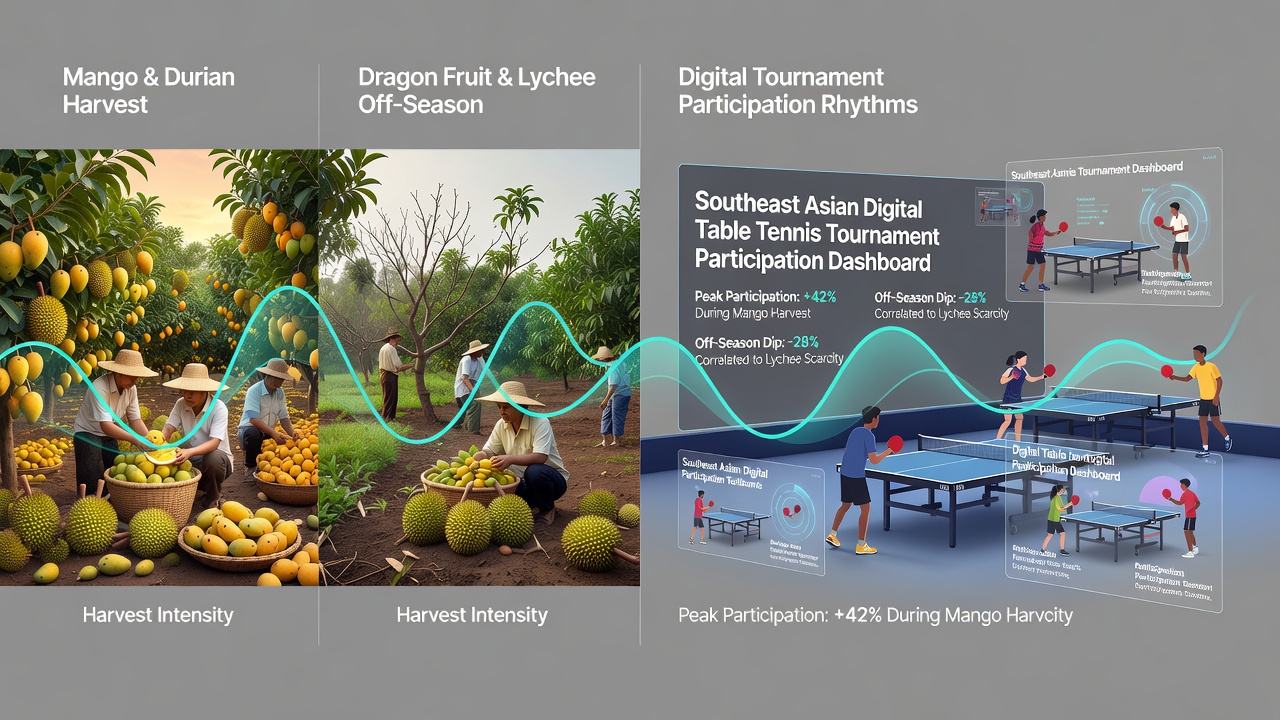 Connectivity infrastructure plays a supporting role. Many rural towers experience congestion when entire villages upload harvest documentation or coordinate logistics through shared mobile networks. Tournament software logs show elevated ping rates and intermittent dropouts between 10 a.m. and 4 p.m. during these periods, prompting players to defer participation until evening stabilization.
Platform Adaptations and Cross-Border Migration
Operators have introduced harvest-aware scheduling tools that automatically weight start times toward post-sunset hours in designated provinces. These adjustments draw from publicly available agricultural calendars published by ministries of agriculture rather than proprietary player data. Vietnamese platforms now publish bilingual schedules that flag adjusted times during mango and longan seasons, allowing participants to plan around cooperative work rosters.
Cross-border movement also surfaces in the data. Players from harvest areas occasionally migrate accounts to urban servers with more stable connections, creating secondary spikes in city-based tournament lobbies. This temporary redistribution flattens once orchards transition to maintenance phases and rural connectivity normalizes.Longer-Term Patterns Across Multiple Cycles
Multi-year comparisons reveal that participation rhythm changes remain stable even as overall platform growth continues. The Asian Development Bank reports on agricultural employment trends align with observed tournament entry dips, confirming that labor allocation rather than economic downturns drives the shifts. Similar correlations appear in Indonesian palm-fruit cycles, where smaller digital poker communities exhibit compressed evening windows during peak collection months.
Tournament directors increasingly incorporate these agricultural calendars into annual planning documents, treating harvest windows as fixed variables alongside public holidays. This approach allows operators to maintain consistent liquidity without introducing artificial incentives that might distort natural participation flows.Conclusion
Seasonal fruit harvest cycles produce repeatable alterations in Southeast Asian digital table tournament rhythms through direct effects on labor availability, network load, and daily schedules. Platforms that align start times with post-harvest rest periods record smoother volume distribution, while those ignoring agricultural calendars experience sharper midday troughs. Continued monitoring of national harvest data alongside platform metrics provides operators with a reliable framework for anticipating these shifts without relying on short-term promotional adjustments.