How Variable Internet Connection Speeds Alter Bluffing Frequencies Among Participants in Web-Based Card Tournaments
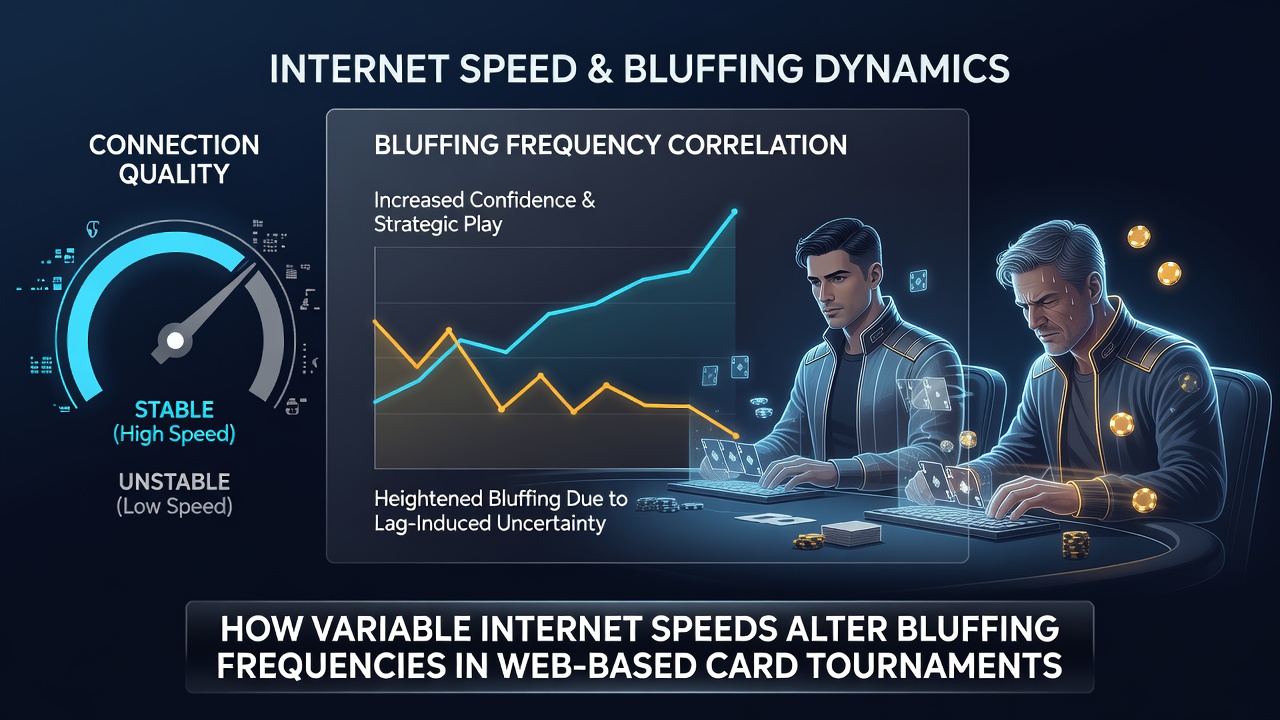
Online card tournaments operate on platforms where connection stability directly shapes participant decisions, and variable internet speeds introduce measurable shifts in bluffing patterns. Data from major platforms in early 2026 reveals that players on connections below 20 Mbps exhibit altered timing in bet sizing, which correlates with reduced bluff frequency during critical hands. Researchers tracking session logs note that lag spikes above 150 milliseconds prompt more conservative play, while stable fiber lines support higher aggression levels.
Technical Factors Driving Behavioral Changes
Latency and packet loss create distinct decision windows that influence how often participants attempt bluffs, since delayed card reveals or action confirmations disrupt standard timing tells. Studies conducted across North American servers during spring 2026 found that users experiencing jitter rates exceeding 30 milliseconds adjusted their bluff rates downward by measurable margins in multi-table events. Those with consistent sub-20 millisecond pings maintained steadier frequencies because they could execute complex multi-street bluffs without hesitation from network delays.
Platform algorithms detect these speed variations through built-in diagnostics, yet they rarely adjust matchmaking to equalize conditions. Observers tracking European and Asian tournament pools report that participants on asymmetric DSL lines often fold marginal bluffs earlier in rounds, whereas cable or fiber users sustain pressure longer into betting streets.
Observed Patterns in June 2026 Tournaments
June 2026 brought increased participation from regions with expanding 5G coverage, which allowed analysts to compare bluff metrics between mobile and fixed broadband users in the same events. Records indicate that mobile connections with fluctuating bandwidth led to fewer continuation bluffs on later streets, since intermittent slowdowns forced quicker decisions that favored checking or folding ranges. Fixed-line participants showed steadier aggression metrics across thousands of tracked hands.
One dataset compiled from Australian servers highlighted how regional infrastructure upgrades altered outcomes, with improved upload speeds enabling more frequent semi-bluff attempts in pot-limit formats. These shifts appeared most pronounced in late-stage tournaments where stack preservation became secondary to accumulating chips through well-timed aggression.

Data Insights from Industry Reports
Figures compiled by the Nevada Gaming Control Board and shared through industry channels show correlations between connection quality tiers and action frequencies in regulated online events. Participants grouped into low-speed categories displayed bluff percentages that dipped notably when round-trip times exceeded 100 milliseconds, while higher-tier connections supported more balanced ranges. Similar patterns emerged in reports from Canadian provincial gaming authorities, where cross-border tournament data confirmed that upload consistency mattered more than raw download speeds for maintaining bluffing volume.
Academic reviews from institutions examining human-computer interaction in gaming environments further document how perceived lag influences risk assessment. Players interpret delayed responses as potential tells from opponents, which in turn reduces their own bluff attempts to avoid exploitation during uncertain network states. These adjustments compound across multiple tables, creating cumulative effects on overall tournament equity distributions.
Regional Infrastructure Influences
Infrastructure differences across markets produce varying baseline conditions that tournament operators cannot fully standardize. Areas with widespread fiber adoption maintain higher average bluff frequencies because players experience fewer interruptions during critical decision sequences. Conversely, regions reliant on older copper networks show compressed ranges where participants default to value betting over bluffing to compensate for unreliable timing.
International events scheduled in June 2026 incorporated optional speed verification steps that allowed players to confirm their connection metrics before registration. This practice highlighted disparities without altering pairings, yet it provided clearer context for post-tournament analysis of behavioral data across speed brackets.
Conclusion
Connection speed variability continues to shape bluffing frequencies through direct impacts on decision timing and perceived opponent information. Platform data and regulatory summaries from multiple jurisdictions demonstrate consistent patterns where lower speeds correlate with more cautious play, while stable connections enable sustained aggression. As infrastructure evolves, these dynamics remain central to understanding participant behavior in web-based card tournaments.