Mapping Regional Player Migration Patterns in Cross-Border Online Gaming Markets
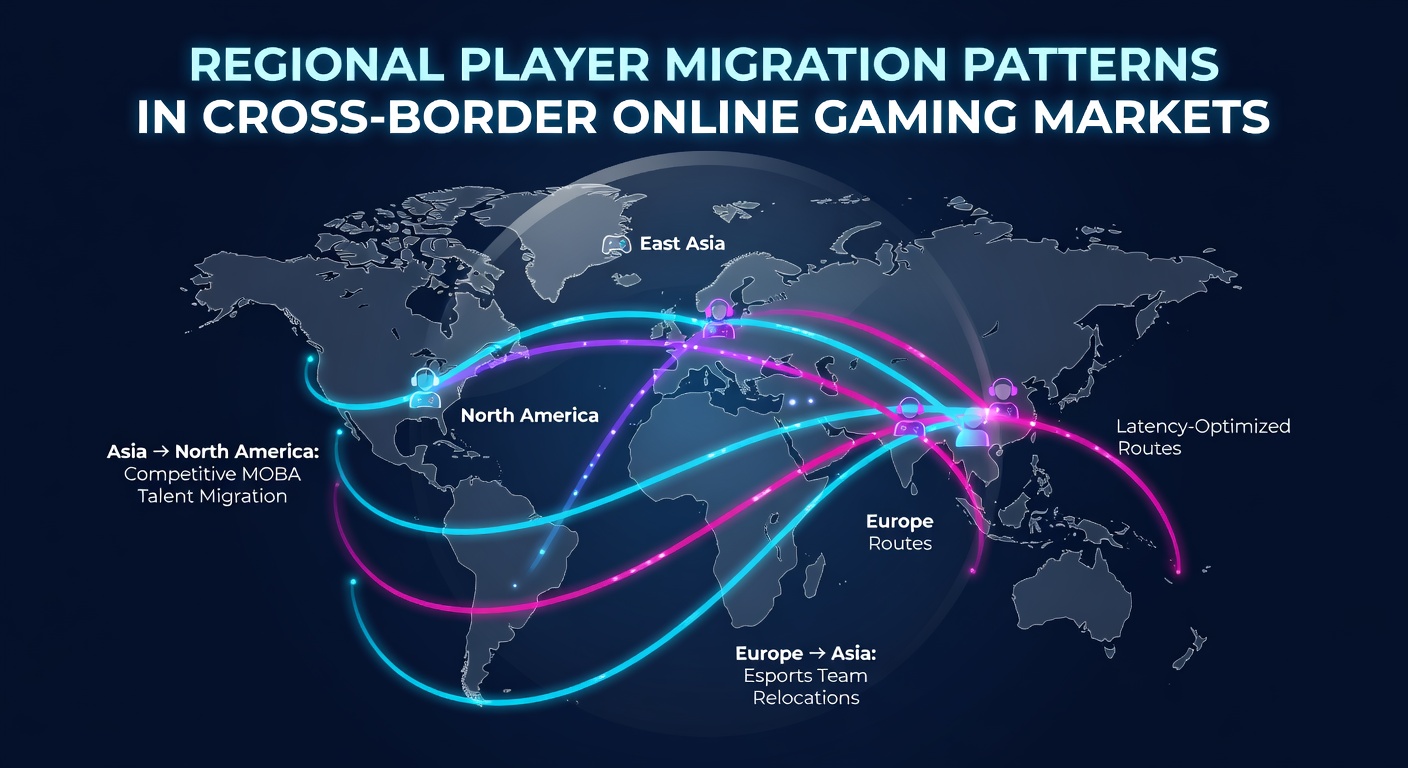
Regional player migration in cross-border online gaming markets has accelerated since 2024 as developers expand server networks and regulators adjust access rules across jurisdictions, and analysts track these shifts through aggregated login data combined with IP geolocation records. Players move between markets for reasons that range from reduced latency on nearby servers to availability of localized content and payment options that align with local banking systems, while industry reports document steady increases in cross-regional logins during peak hours in multiple time zones.
Drivers Behind Cross-Border Player Flows
Technical performance remains a primary factor because high ping times in distant regions push players toward servers with better connectivity, and studies from network monitoring firms show migration spikes when new data centers open in Southeast Asia or Eastern Europe. Currency stability and transaction fees also influence choices since some markets offer lower conversion costs through regional payment gateways, whereas observers note that players from high-inflation economies frequently select platforms headquartered in jurisdictions with more predictable exchange rates. Content differences create additional movement as regions unlock region-specific cosmetics, events, and storylines at staggered intervals, prompting temporary logins from outside the intended audience until global releases catch up.
Regional Patterns Observed in 2025 and Early 2026
Data compiled through 2025 revealed consistent flows from North American accounts into European servers during evening hours in the Eastern Time Zone, driven largely by community events that attract larger groups on EU-hosted instances. In the first quarter of 2026, analysts recorded elevated activity from Latin American players accessing North American West Coast servers after several titles introduced Spanish-language voice chat support on those nodes. Asian markets displayed more complex patterns because players from Japan and South Korea often maintain accounts in both domestic and Southeast Asian regions to access different tournament brackets and seasonal rewards that rotate on independent schedules. May 2026 saw further adjustments when several platforms synchronized maintenance windows across time zones, which temporarily redirected traffic through fallback servers in Oceania and produced measurable upticks in logins from Australian and New Zealand accounts.
Techniques Used to Map These Movements
Researchers combine anonymized telemetry with publicly available regulatory filings to construct migration maps that highlight corridors of sustained activity rather than one-off logins, and organizations such as the Interactive Software Federation of Europe publish periodic summaries drawn from member studio reports. Machine learning models process login timestamps alongside device fingerprinting to distinguish between travelers using VPNs and residents who have relocated, which improves accuracy when estimating true regional shifts. Heatmaps generated from these datasets illustrate how certain corridors, such as those linking Eastern Europe to Central Asia, maintain steady volume even during periods of regulatory tightening in either market.
Impacts on Game Economies and Infrastructure
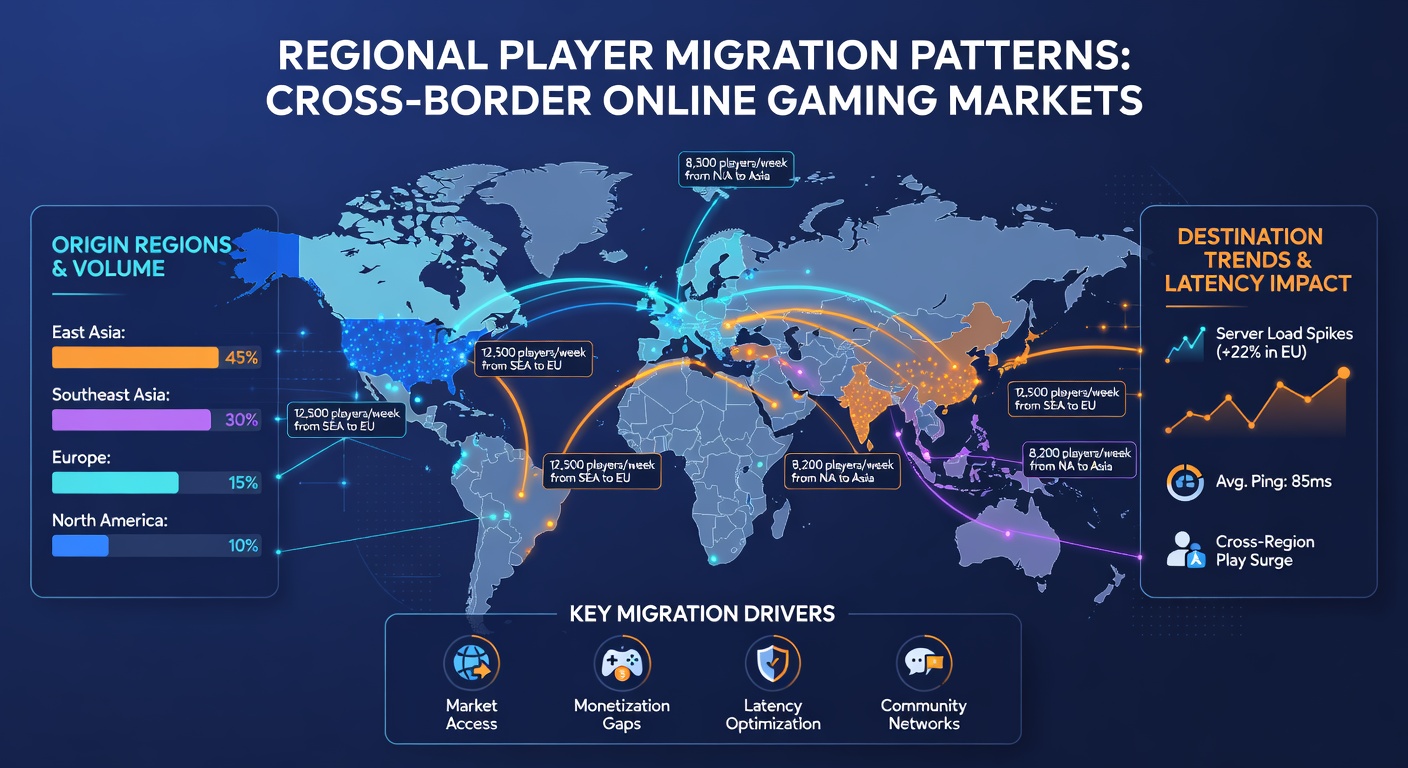
Server operators respond to documented migration corridors by adjusting capacity during predicted peak periods, and several major titles added nodes in the Middle East during late 2025 after telemetry showed growing traffic from both European and Asian accounts. In-game economies experience localized effects when migrating players bring distinct purchasing behaviors, such as higher rates of cosmetic item acquisition in regions where disposable income aligns differently with virtual goods pricing. Platform operators monitor these patterns to refine regional marketing and to schedule localized events that retain players who might otherwise rotate between markets on a seasonal basis.
Regulatory Influences Across Jurisdictions
Policy changes in one region frequently redirect flows toward neighboring markets with more permissive frameworks, and Canadian provincial data from early 2026 indicated modest increases in cross-border logins following updates to digital service requirements in certain provinces. Australian regulators released infrastructure usage statistics that highlighted similar patterns among players seeking uninterrupted access during domestic network maintenance periods, while research teams at several universities have begun correlating these shifts with broader digital trade agreements that ease data transfer restrictions between participating countries.
Conclusion
Continued refinement of mapping methods will allow developers and regulators to anticipate infrastructure needs and to design features that accommodate mobile player bases without fragmenting community experiences across borders, and ongoing data collection through 2026 will clarify whether current corridors represent temporary adjustments or longer-term structural changes in how online gaming populations distribute themselves globally.