Public Holiday Schedules and Their Effects on Digital Poker Participation Across Continents
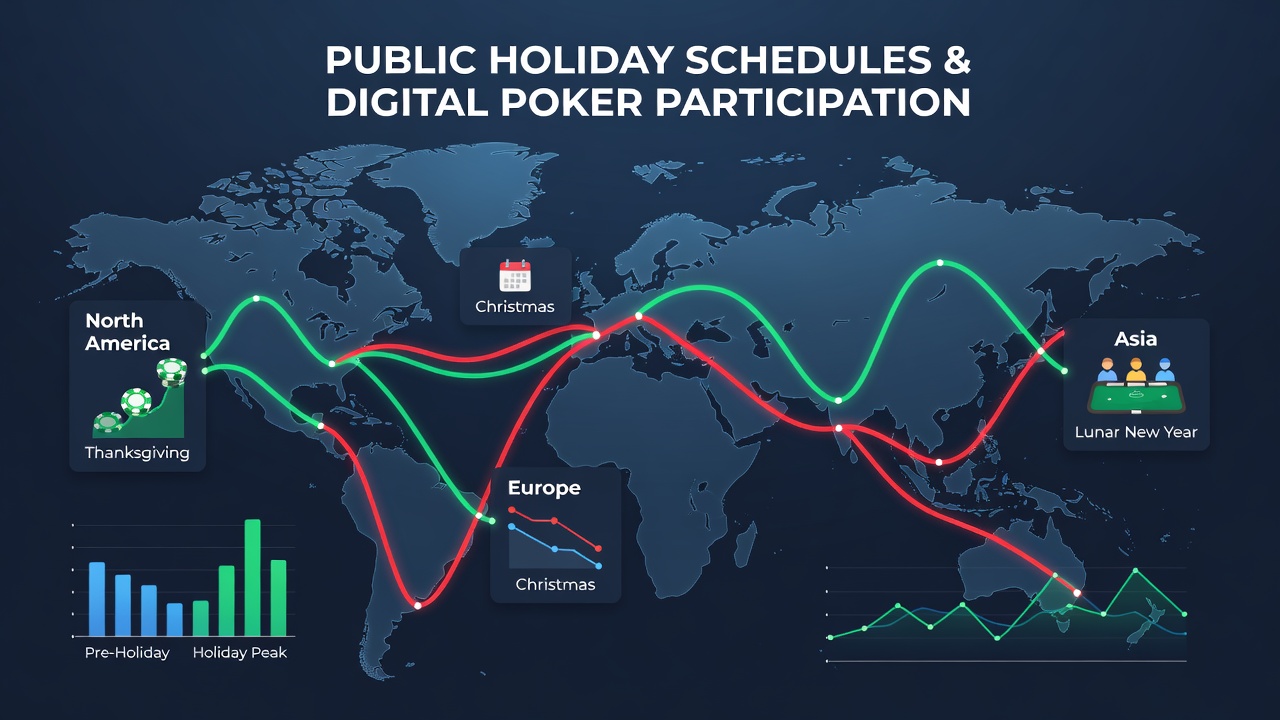
Public holiday schedules create measurable shifts in digital poker participation rates across multiple continents, and operators track these patterns through traffic data that reveals consistent regional differences. In North America, holidays such as Independence Day and Thanksgiving align with increased session volumes on major platforms, while in Europe similar spikes occur around Christmas and national days in countries like France and Germany. Data from industry reports shows that participation rises when people have extended time off from work, yet the magnitude of these increases varies depending on local customs and internet accessibility.
North American Trends During Key Dates
Observers note that July 4th in the United States often coincides with higher login numbers on poker sites, particularly in the evening hours when family gatherings wind down. Canadian platforms report comparable upticks during Victoria Day and Canada Day, where users from provinces with strong online gaming regulations contribute to the overall volume. One analysis of transaction logs from 2025 indicated that average session durations extended by several minutes on these dates compared to typical weekdays, and this pattern held steady into the first half of 2026. June 2026 brought additional activity around Juneteenth observances, with operators recording modest gains in recreational player entries across eastern time zones.
European Variations and Platform Adjustments
European markets display more fragmented responses because holiday calendars differ sharply between nations. In the United Kingdom, Boxing Day produces sustained evening traffic, whereas southern European countries see peaks around Epiphany and Easter Monday. Regulatory filings from the Malta Gaming Authority document that cross-border operators adjust server capacity ahead of these periods to handle simultaneous connections from multiple jurisdictions. Research conducted by academic groups in Sweden found that participation among users aged 25 to 40 increased notably during summer bank holidays, while older demographics maintained steadier patterns throughout the year.
Asian and Australian Patterns
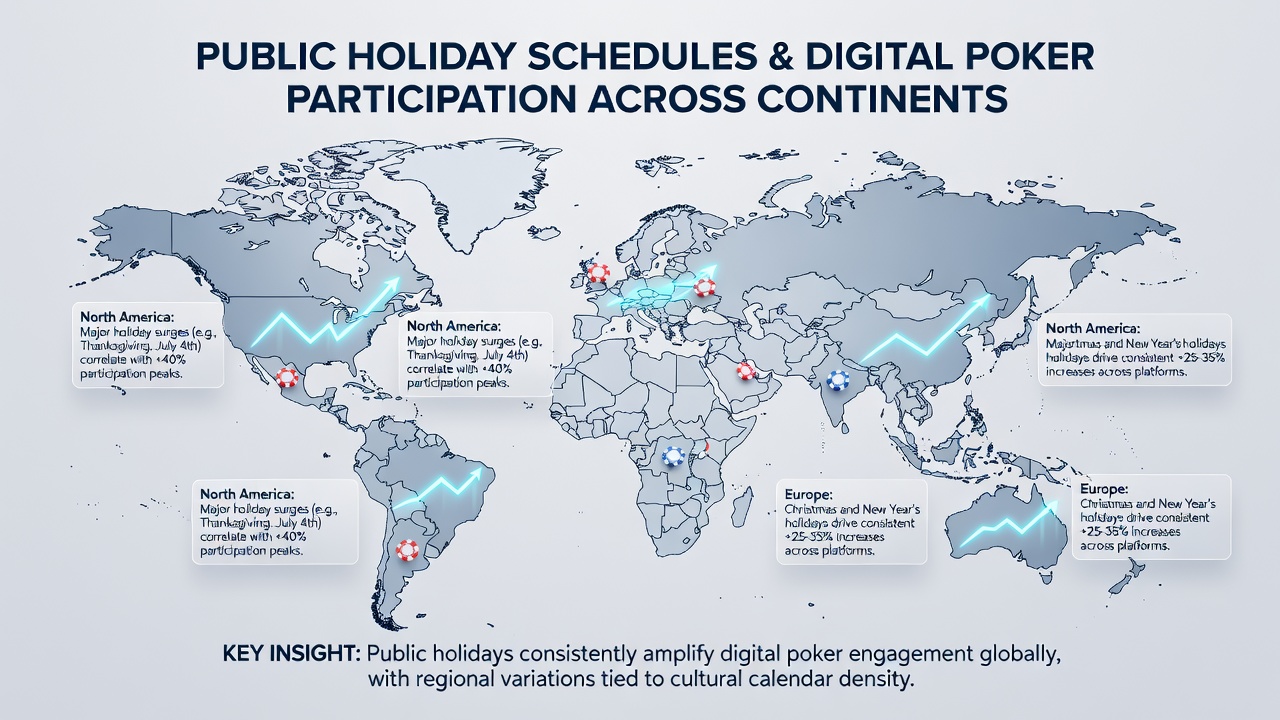
Across Asia, Lunar New Year celebrations drive substantial participation surges in markets where digital poker operates under regulated frameworks such as those in the Philippines and parts of Southeast Asia. Platforms serving these regions report that multi-day holidays allow users extended blocks of play, resulting in elevated hand volumes during afternoon and late-night windows. In Australia, public holidays tied to ANZAC Day and the Melbourne Cup produce distinct afternoon spikes, and figures released by the Australian Institute of Family Studies highlight how remote participation rises when traditional events overlap with online availability. These regional differences stem from varying work schedules and cultural attitudes toward leisure time rather than uniform global trends.
Contributing Factors and Data Sources
Weather conditions, family obligations, and time zone alignments further shape participation levels during holidays. Studies compiled by the National Council on Problem Gambling in the United States indicate that recreational users account for most of the holiday-related growth, while high-volume players maintain consistent activity regardless of calendar dates. American Gaming Association reports provide supporting statistics on overall digital gaming trends that align with poker-specific observations. Time zone overlaps also matter: when holidays in one continent coincide with standard working hours elsewhere, traffic sometimes redistributes rather than simply increasing overall.
Operators respond to these patterns by scheduling targeted promotions around major holidays, though the effectiveness of such campaigns varies by market maturity. In emerging regions of South America, where digital poker adoption continues to expand, national independence days have begun to generate measurable lifts in new account registrations according to data shared at industry conferences. Conversely, some Asian markets experience temporary dips during religious observances that discourage gaming activities altogether.
Conclusion
Public holiday schedules influence digital poker participation through a combination of free time availability, cultural norms, and platform infrastructure readiness. Patterns observed in 2026 demonstrate that while spikes occur across continents, the timing, duration, and demographic makeup of increased activity remain distinctly regional. Continued monitoring by regulatory bodies and research institutions supplies the data necessary for operators to anticipate these shifts and allocate resources accordingly.