Regional Weather Shifts and Their Surprising Effects on Timing Patterns for Online Tournament Entries in Mixed Casino Environments

Regional weather patterns have begun altering when participants submit entries to online tournaments hosted within mixed casino environments that combine digital platforms with physical venues, and data collected through mid-2026 shows consistent timing displacements tied directly to localized climate variations. Observers tracking these shifts note that increased frequency of extreme weather events disrupts connectivity infrastructure while simultaneously changing player availability windows in ways that redistribute entry peaks across different hours of the day.
Connectivity Disruptions Drive Entry Delays
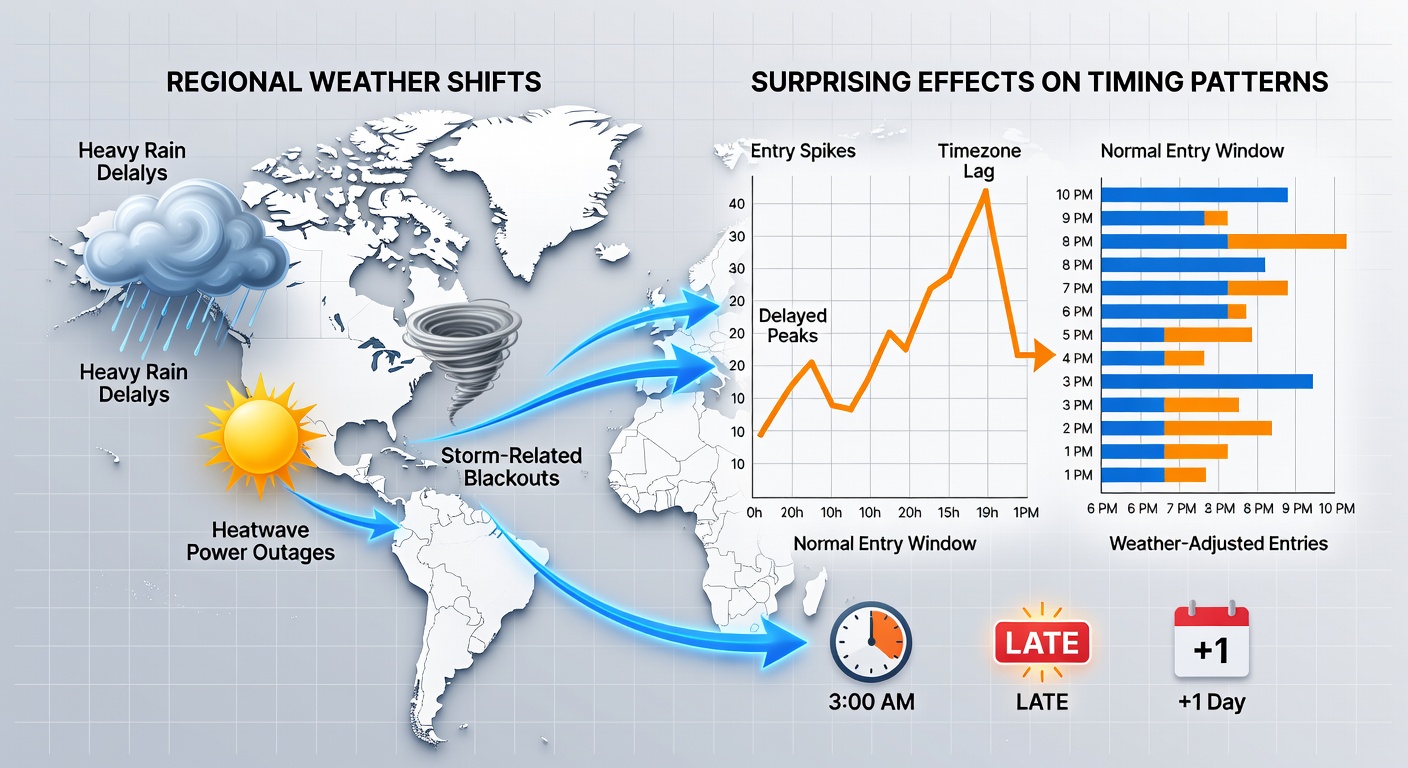
Storms and flooding in coastal zones create temporary outages that push registration activity later into the evening once services restore, and figures from multiple monitoring services reveal entry spikes occurring two to four hours after typical patterns during active weather systems. In Southeast Asian markets where monsoon intensity has risen over the past three seasons, tournament platforms record delayed logins concentrated between 8 PM and midnight local time rather than the usual afternoon clusters, because power fluctuations prevent earlier access attempts. Mixed casino operators managing both online portals and on-site terminals observe that physical locations experience parallel slowdowns when regional grids falter, forcing participants to wait until conditions stabilize before completing hybrid entries that link digital accounts to venue-based play.
Heat Waves Shift Morning and Evening Windows
Prolonged heat events in inland and desert-adjacent areas produce different timing adjustments, with participants avoiding midday submissions due to elevated indoor temperatures that affect device performance and personal comfort. Research compiled by meteorological agencies indicates that daytime highs exceeding historical averages by more than 4 degrees Celsius correlate with increased early-morning entries between 5 AM and 9 AM in affected zones, as players complete registrations before ambient conditions intensify. In June 2026, several North American and Australian markets documented this exact redistribution during successive heat advisories, where afternoon entry volumes dropped by measurable margins while overnight and pre-dawn activity rose proportionally. Operators running combined online and land-based tournaments note that these shifts require schedule recalibrations to accommodate the new concentration periods without overlapping server loads from simultaneous physical venue traffic.
Regional Data Patterns in 2026
North American hurricane seasons extending into early summer months have produced measurable effects on Gulf Coast and Eastern Seaboard entry timing, and government weather records show that tropical storm activity correlates with entry deferrals of up to six hours post-storm passage. Canadian regulatory summaries and Australian environmental reports both document parallel behaviors during regional flooding episodes, where participants cluster submissions once connectivity returns rather than following pre-event schedules. European heat anomalies during the same period prompted similar adjustments in Central and Southern zones, with platforms noting compressed entry windows around cooler overnight hours. Mixed environments that integrate online accounts with physical card rooms experience compounded effects because venue closures or reduced operating hours during weather events force additional reliance on digital channels at nonstandard times.
Infrastructure and Behavioral Factors Combine
Power grid resilience varies significantly by region, and areas with older transmission networks experience longer recovery periods that extend the window between weather impact and resumed tournament activity. Participants adapt by monitoring forecasts and pre-scheduling entries where platforms allow, yet real-time data indicates most still respond reactively once systems stabilize. Mixed casino settings add layers because physical locations may remain accessible while online components face outages, or vice versa, creating staggered entry flows that operators must balance across both channels. Industry associations tracking these metrics report that predictive modeling based on weather forecasts now informs capacity planning for servers during anticipated disruption periods, reducing bottlenecks when delayed entries arrive simultaneously.
Implications for Tournament Scheduling
Platform administrators have started incorporating regional weather forecasts into entry deadline adjustments, and preliminary results from 2026 trials show reduced congestion when start times flex by several hours in response to predicted events. Data from multiple jurisdictions demonstrates that such adaptations maintain participation levels even when initial timing patterns shift, because players retain access to the same total entry opportunities. Observers continue monitoring whether these weather-driven changes produce lasting alterations in player habits once conditions normalize, or whether patterns revert once infrastructure recovers.
Conclusion
Regional weather shifts continue reshaping entry timing distributions for online tournaments in mixed casino environments through direct infrastructure effects and indirect behavioral adaptations. Continued collection of region-specific data through the remainder of 2026 will clarify whether these patterns stabilize into predictable seasonal variations or remain tied to individual weather events. Operators and participants alike track developments as climate variability intersects with expanding hybrid gaming formats across multiple markets.